
Studio
The on-air screen. Decks, countdowns, carts, meters and the log, for the host in the chair.
 Join the beta
Radio automation Beta opens January 2027
Tightboard plays your station from the PC in the rack, keeps playing when the internet doesn't, and mixes records like the best DJ you never hired.
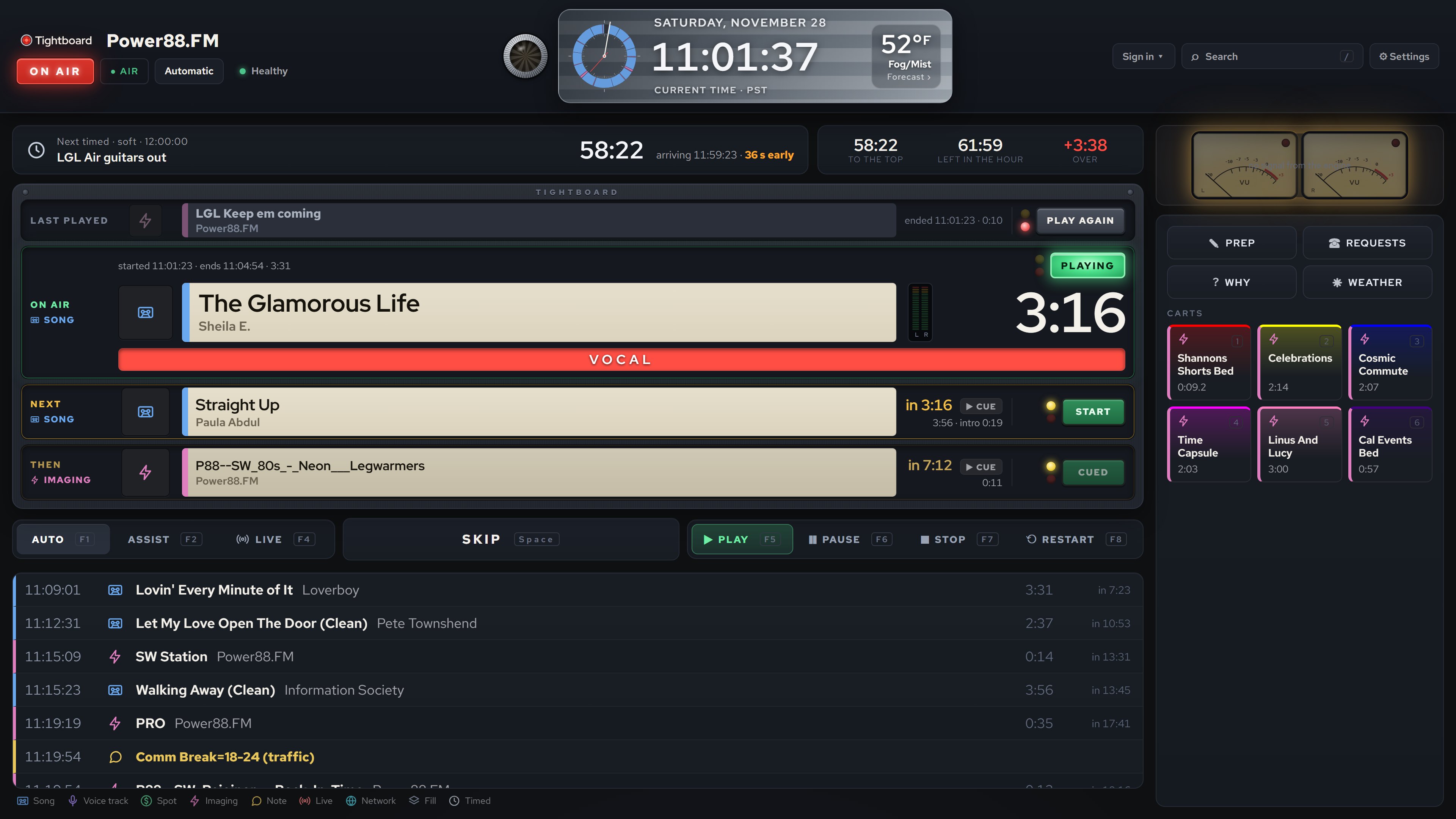
Tightboard Studio on the air at Power88.FM.
Tightboard Studio
Big countdowns, a lamp that turns amber then red before every break, and the script for your next break sliding in when it's your turn. Every control is one key or one touch.
Mix shows
Tightboard Producer
Your library, categories, clocks and rules, and a music scheduler that writes the day and tells you, song by song, why it chose it and what it passed over.
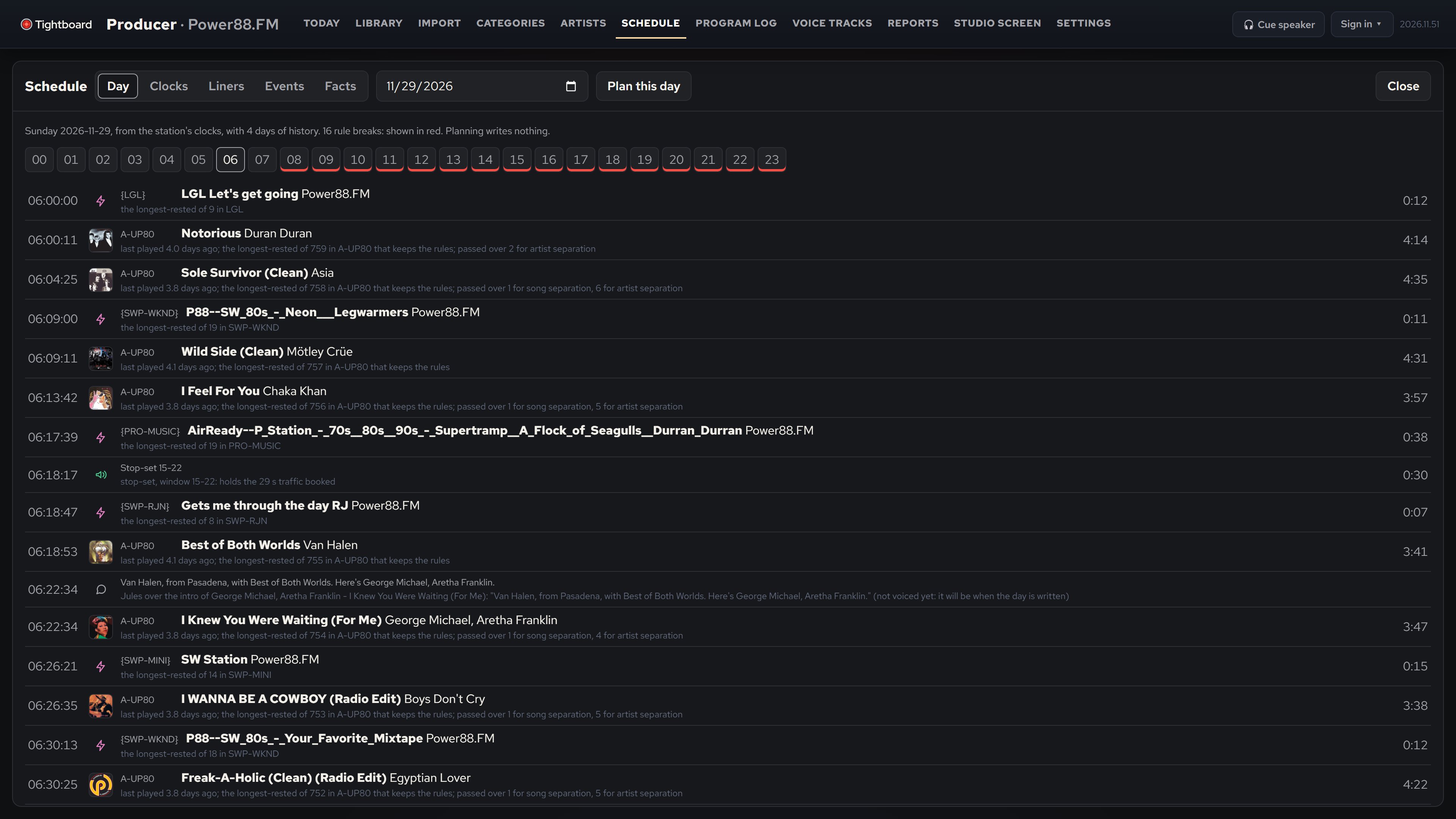


The library
Every track is measured as it comes in: loudness, tempo, the first downbeat, where the singing starts and stops, how it ends. Cue points are set from the audio, and you can move any of them with a drag.
One system
The engine plays the air. Around it, an app for everyone who touches the station: the host on the air, the program director, the voice tracker, and whoever is running the board from away.
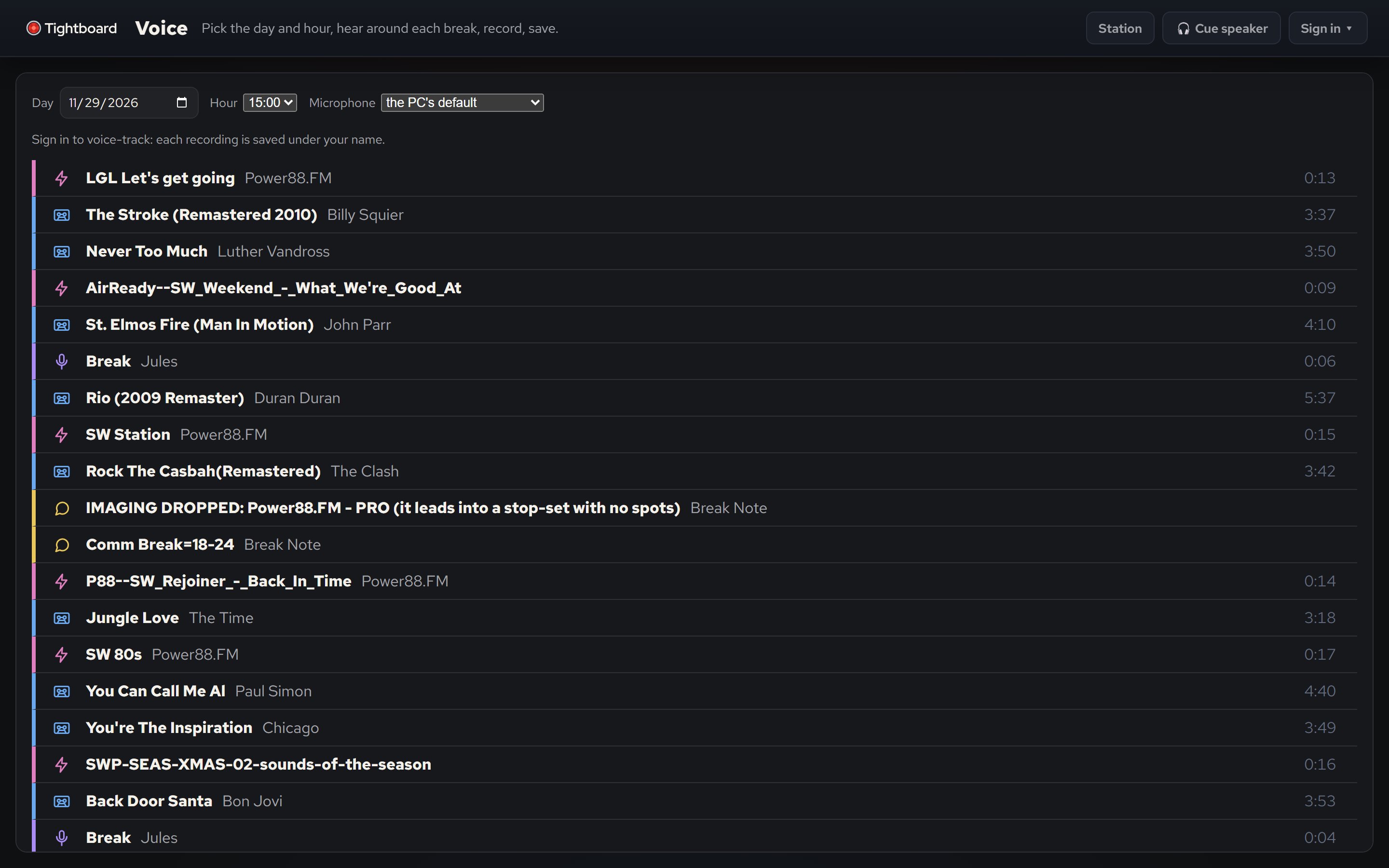
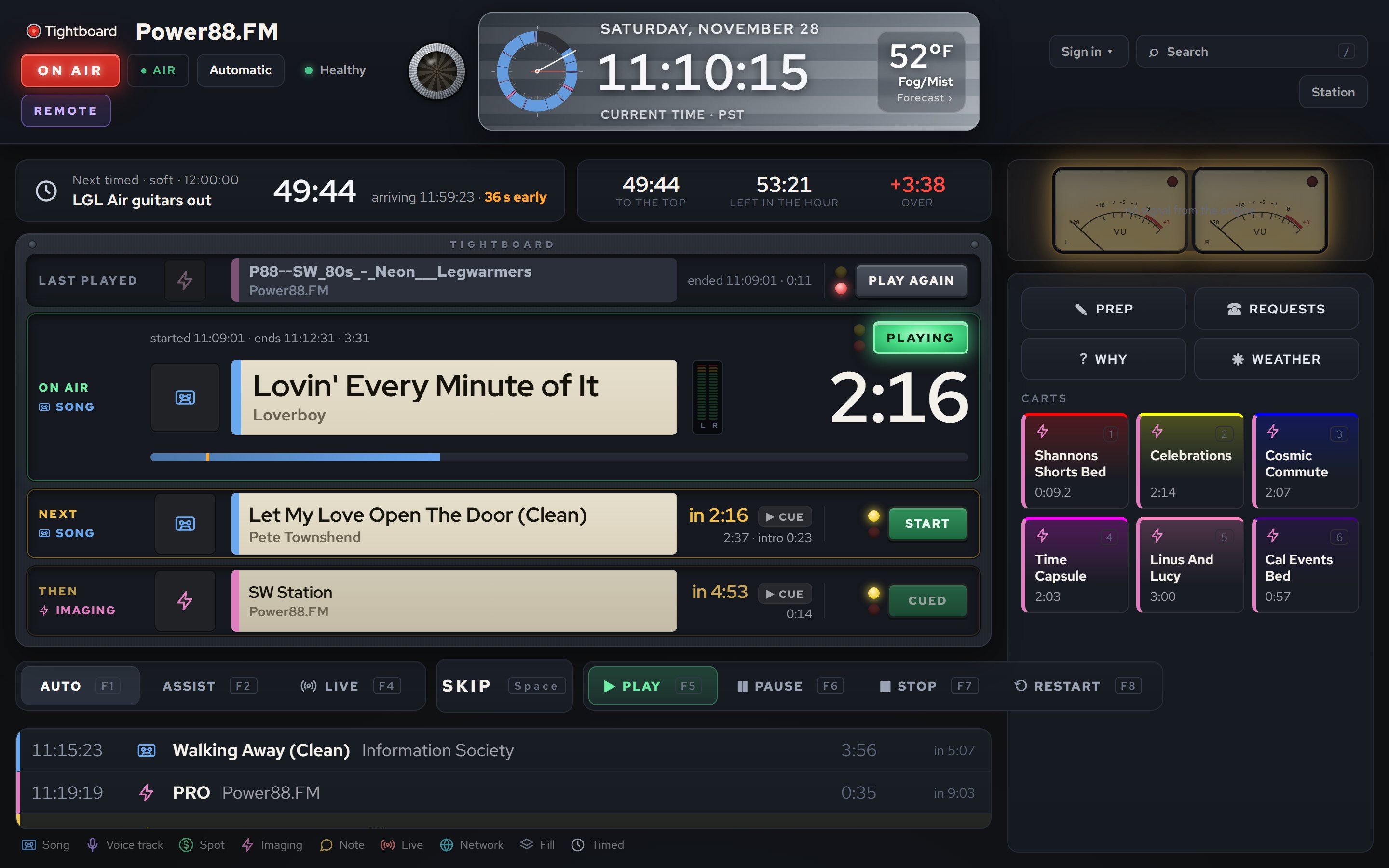
The on-air screen. Decks, countdowns, carts, meters and the log, for the host in the chair.

Library, categories, clocks, the music scheduler and the program log, for the program director.

Voice tracking. Pick the hour, hear around each break, record, save. It airs where you put it.

The on-air screen and its controls from away, tagged REMOTE so nobody mistakes it for the studio.
Any computer on the station's network becomes a voice-tracking booth. Recording from home, with no port opened on the station's network, comes with the beta.
Every command from Remote needs a signed-in PIN, and its door answers only the on-air screen: no settings, no library.
Why a song was dropped, why a break started early, why a mix became a segue. On the screen and in the as-run.
Radio automation and playout. It plays your station's log from a Windows PC at the station, with an on-air screen for the host (Studio), a library and music scheduler for the program director (Producer), voice tracking (Voice) and the on-air screen run from away (Remote).
No. The audio engine runs on the station's own PC as a Windows service and plays from local files. With the internet down the station stays on air; the online parts catch up when it comes back.
In a mix show's hours, Tightboard reads each record's tempo and first beat, changes the next record's speed by up to 3%, starts the blend on the bar and mixes for eight bars with a bass swap. Two records too far apart in tempo segue as usual, and it says why.
No. Tightboard plays your station's music; your station holds its own licences.
Nothing while it's in beta. When it ends, beta stations get 20% off their licence for joining in the first 60 days, as a thank-you for testing.
Power88.FM is on the air with Tightboard. The beta opens in January 2027 to the first 100 stations; after that we open it up across the country, a region at a time.
The beta
The beta opens in January 2027, and only the first 100 stations are accepted. After that, we open Tightboard up across the country a region at a time. No charge during the beta. And when it ends, beta stations get 20% off their licence for joining in the first 60 days: our thank-you for helping build it.